There is a particular kind of disappointment in opening a washing machine after a cycle and finding that the laundry does not smell clean. Instead, there is a damp, sour note in the air. You pull back the rubber seal and find a smear of gray-black residue tucked into one of the folds.
It is easy to assume the machine needs more cleaning—or perhaps the laundry needs more detergent.
Modern liquid and powder detergents are generally more concentrated than older formulas, while high-efficiency washers are designed to use low-sudsing HE detergents in lower-water conditions. When more detergent is used than the load and machine call for, excess product can contribute to residue and buildup. Over repeated cycles, that residue can build up alongside fabric softener, laundry soil, lint and trapped moisture.
It might start with a slightly slimy dispenser, a faint smell when the door opens, or a few odd flakes on an otherwise clean load.
What the residue actually is
“Scrud” is a household term rather than a precise diagnosis. It is commonly used for the greasy or waxy residue that can accumulate inside a washing machine when detergent, fabric softener and laundry soils build up over time.
A dark smear around the seal can be detergent or fabric-softener residue mixed with ordinary laundry grime. Lint, hair and other debris can collect there too, and a persistently damp seal can provide the conditions for mold or mildew to develop.
The rubber seal happens to be an excellent hiding place for all of it.
Why more detergent can leave more behind
The old mental picture of laundry detergent is simple: clothes are dirty, soap removes the dirt, and more soap ought to make the process work better. Concentrated detergents make the second part of that logic less reliable.
Most liquid and powder detergents are now concentrated, so the amount needed can be smaller than what people remember using with older formulas. Start with the dosing guidance on the detergent label and the instructions for your washing machine.
Detergent concentration varies from one product to the next, so there isn’t a useful universal “spoonful per load” rule.
HE washers work a little differently. They use lower water levels than traditional machines, and HE detergents are formulated for those conditions. Using too much detergent can produce excessive suds and contribute to residue.
A little extra detergent doesn’t suddenly make the product “bad.” The issue is that the washer still has to rinse away everything that goes into the load.
Samsung’s guidance warns that using too much detergent can contribute to soap-scum buildup inside the washer and, in some cases, redeposit dirt onto clothing.
This is where an unpleasant smell can lead to a surprisingly unhelpful habit: adding more detergent. It feels logical in the moment, but if excess product is already contributing to buildup, another dose isn’t addressing the source of the problem.
The amount in the cap can look harmless, especially when you’re used to filling it by eye. But detergent labels are there for a reason, and concentrated formulas can make old measuring habits surprisingly generous.
It is an easy habit to fall into because detergent feels like the obvious answer to dirty-smelling laundry. The washer, however, may be the part that needs attention.
Why the rubber gasket collects the evidence
On a front-load washer, the rubber door gasket has folds that are easy to overlook.
The folds help the seal keep water inside the machine while the drum spins, but they also create sheltered spaces where water, lint and residue can linger.
After a wash, the gasket can hold onto moisture, while lint, hair and small bits of debris remain caught in its folds. A thin layer of detergent or fabric-softener residue can add to the buildup, particularly if the door is closed before the seal has had time to dry.
It is also easy to miss because the part of the seal that needs cleaning is often the part you don’t see at first glance. The front edge can look perfectly respectable while the deeper fold is holding onto yesterday’s laundry water and whatever came along with it.
A normal wash cycle doesn’t remove the need to clean the seal by hand. The gasket comes into contact with water, detergent and whatever comes off the laundry, so it shouldn’t be assumed to stay clean simply because the machine is running regular wash cycles.
The gasket isn’t the only place worth checking. Detergent drawers can collect residue too, and persistent odors may point you toward the pump filter or drainage system, depending on the washer.
How to clean a washing-machine gasket without making the problem worse
Washing-machine cleaning isn’t quite a one-recipe job. The recommended products and maintenance cycles vary between machines, so check your appliance manual before reaching for bleach, a specialist washer cleaner or a descaling product.
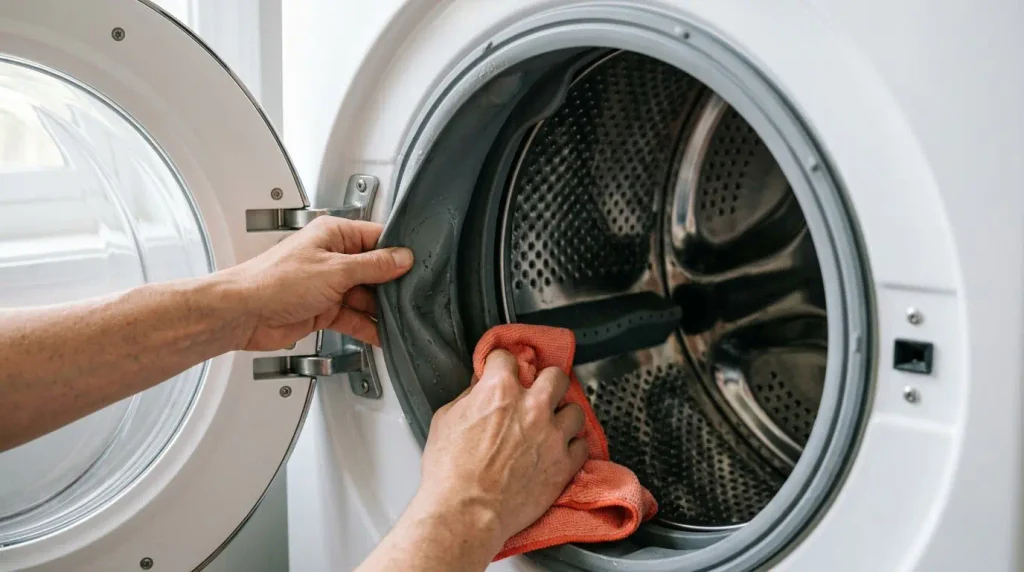
The hands-on part is fairly simple. With the washer empty, pull the gasket back gently and inspect the folds. Remove visible lint, hair, small objects and loose residue with a soft cloth.
The cleaning solution is the part that needs more care. Manufacturers differ in what they recommend for the gasket and for the washer’s cleaning cycle, so a product that’s suitable for one machine isn’t automatically right for another.
Once the seal is clean, wipe it dry. Then move to the detergent dispenser and its housing, where residue can collect out of sight. If your washer has a Tub Clean, Self Clean or similar maintenance cycle, follow the manufacturer’s instructions for using it.
Don’t mix cleaning products to make a stronger solution. Bleach should never be mixed with vinegar, ammonia or other household cleaners because some combinations can produce dangerous fumes. Before using bleach, a descaler or a specialist washing-machine cleaner, check that the product is suitable for your appliance.
What not to do
The easiest way to keep a washer clean is to avoid turning ordinary laundry into a chemistry experiment.
Don’t add extra detergent because clothes smell. Check the washer first, particularly if wet clothes have been sitting inside or the problem keeps returning.
Don’t assume suds mean superior cleaning. HE washers are designed for controlled, low-sudsing operation, and excessive foam can interfere with rinsing and contribute to residue.
Don’t use a random cleaning mixture because it worked for someone’s machine online. Cleaning recommendations vary between appliances, particularly when bleach or other strong products are involved.
Don’t scrub the rubber aggressively. The gasket needs to remain intact and flexible, so use the cleaning method recommended for your machine. If the seal is torn or no longer sealing properly, cleaning won’t fix the problem and it may need to be replaced.
Don’t clean only the part you can see. The detergent dispenser can collect residue too, while persistent odors may be a reason to check the pump filter if your machine has one and the manufacturer recommends it.
How much detergent should you actually use?
This is where the most useful answer is also the least satisfying: there is no universal tablespoon measurement.
The right amount depends on the detergent, the size and soil level of the load, and the washing machine itself.
Start with the detergent label and the instructions for your washer. Load size and how dirty the clothes are can affect the recommended amount, and you should never exceed the MAX line on the dispenser.
For a U.S. HE washer, use detergent labeled for HE machines.
And measure.
The cap is not a particularly reliable measuring tool when you’re pouring by eye. A large bottle opening can make a small recommended dose look surprisingly insignificant, which is one reason old habits can linger even after detergents have become more concentrated. Use the amount specified on the detergent label and your washer’s instructions, and never exceed the MAX line on the dispenser.
Should you leave the washing-machine door open?
For a front-load machine, leaving the door ajar between loads can help the interior dry.
Leaving the door and, where practical, the detergent drawer open after a wash gives trapped moisture a chance to evaporate.
It won’t remove buildup that’s already there, but it can make the washer less hospitable to lingering moisture between loads.
Removing wet laundry promptly helps for the same reason. Leaving damp clothes sitting in the drum gives odors more opportunity to develop and linger.
When cleaning the gasket isn’t enough
If the smell remains after you’ve cleaned the gasket and dispenser and run the recommended maintenance cycle, the problem may be somewhere else in the washer.
Persistent odors can have other causes, including problems with drainage or a dirty pump filter on machines that have one. Check your washer’s troubleshooting guidance before assuming the gasket is responsible.
If the rubber is torn, badly deteriorated or no longer seals properly, cleaning won’t fix the problem and the gasket may need to be replaced. If staining or mold remains after you’ve followed the manufacturer’s cleaning instructions, check whether replacement is recommended rather than repeatedly using stronger products on the seal.
A leaking gasket is a different issue. If the seal is damaged or something is preventing it from closing properly, water can escape during a cycle. At that point, the washer needs repair rather than another round of cleaning.
If cleaning hasn’t resolved the odor or the washer is leaking, it’s time to look at the appliance itself and follow the manufacturer’s service guidance.
The detergent fix is smaller than you think
Detergent is a measured ingredient, not a measure of how serious the cleaning job feels.
If the washer is producing odd smells or leaving residue, pouring in more detergent can be like trying to clear a clogged sink by adding more soap. Start by working out where the residue or smell is coming from.
Start with the gasket and dispenser, then use the maintenance cycle recommended for your washer if it has one. Giving the machine time to dry between loads and removing wet clothes promptly can help too. Once you’ve dealt with the obvious sources of residue and moisture, revisit the detergent dose and make sure you’re using the amount intended for that product and load.
A washing machine does not need to smell like perfume to be clean. It needs to rinse properly, drain properly and dry out between loads. And the detergent only needs to do the job it was measured to do.