A few weeks before a fall trip to the West, Sarah had already done the part of vacation planning she actually enjoyed. The hotel was booked, the route was mapped, and the cooler was on the packing list. She had even checked the weather twice, because anyone who has driven into a mountain park in October knows that the forecast you see at home and the weather you meet at 7,000 feet are not always on speaking terms.
Then she opened the national park website and ran into the one part of the trip she hadn’t expected to be complicated.
Do I need a reservation to get in?
What should have been a quick answer turned into a list of timed entry, vehicle reservations, permits, parking restrictions, shuttle reservations and seasonal rules. An article she’d found through Google said one thing, a travel guide from the previous year said another, and someone in a travel group was certain the rules had changed again.
The trip was already booked. Now Sarah had one more thing to worry about: what happens if we get there and they don’t let us in?
That’s the question many travelers are running into as they plan national park trips in 2026. The tricky part is that the rules changed differently from park to park—and sometimes from one part of a park to another.
The question travelers are asking is slightly wrong
For years, a national-park reservation could feel like a simple appointment. You picked a date, chose an arrival window, got the reservation and went. In 2026, that mental model works at some parks and fails badly at others. Yosemite no longer requires an entrance reservation. Arches no longer requires timed entry. Mount Rainier isn’t using timed entry at all. Rocky Mountain National Park, meanwhile, still requires timed entry during specified hours.
Glacier has gone in yet another direction. There is no park-wide vehicle reservation, but the park introduced a summer experiment involving a ticketed shuttle and timed parking at Logan Pass. That system changed again in September.
So the more useful question is:
“What part of my visit is the park trying to control?”
It might be the number of vehicles entering, the parking at the end of a busy road, or the shuttle taking visitors to a popular area. In some cases, the restriction applies to one particular corridor inside an otherwise open park.
And sometimes the restriction isn’t an entrance reservation at all. It is a permit for the thing you actually came to do. When you’re sitting in a car after driving six hours, that distinction doesn’t feel technical.
What happened to the old reservation systems?
The National Park Service announced its 2026 approach as a collection of park-specific systems rather than one standard national model.
At Arches and Yosemite, advance timed-entry or vehicle reservations were removed. Glacier dropped its park-wide vehicle reservation system. Rocky Mountain retained timed entry during its busiest months.
A reservation is only one way to manage visitors.
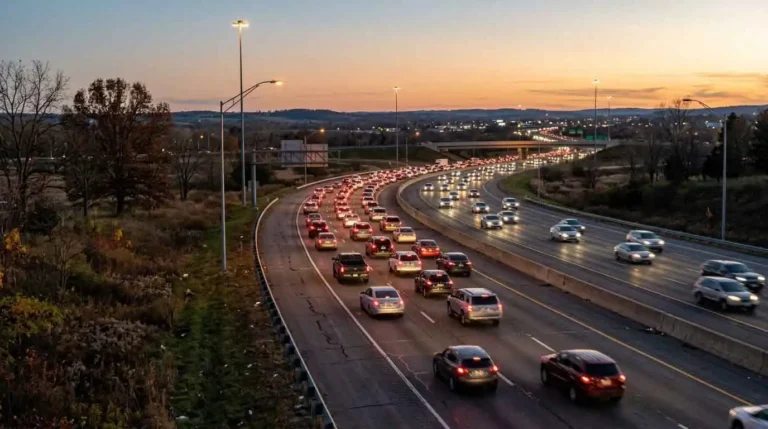
Timed entry makes sense when the problem is too many cars arriving at once. But if everyone is ultimately heading for the same parking lot at the end of the road, controlling who gets through the front gate may not solve much. The parks haven’t necessarily stopped managing congestion. In several cases, they’ve simply moved the management farther down the road.
Yosemite: No entrance reservation doesn’t mean no planning
Yosemite is a good example of what this new approach looks like.
For 2026, Yosemite dropped its timed entrance reservation system after evaluating traffic, parking availability and visitor use during the previous season. That does not mean Yosemite has stopped managing traffic. The park says it is using real-time traffic monitoring, active parking management, additional staffing and congestion warnings instead.
But the practical reality is a little different.
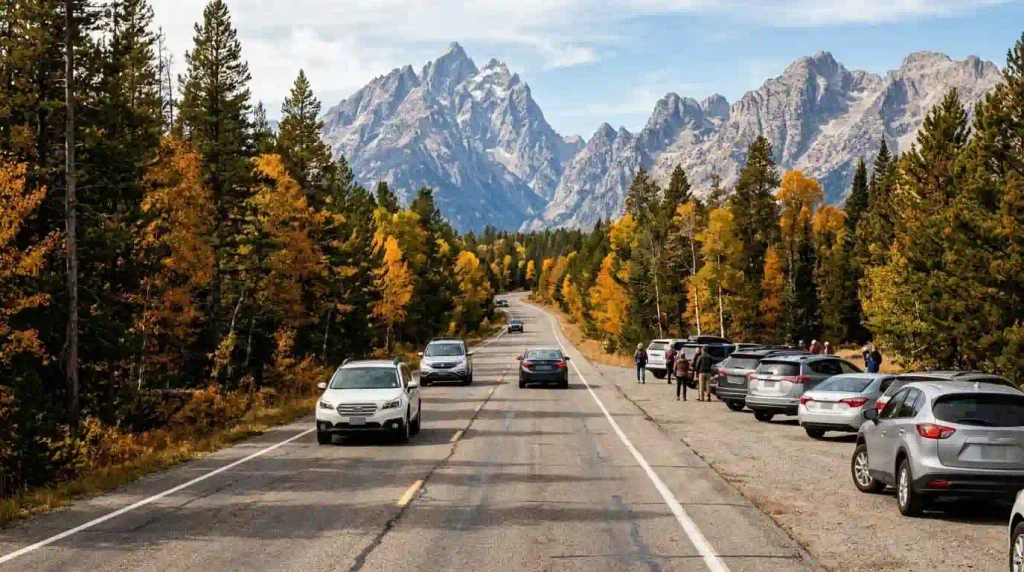
If you’re driving into Yosemite Valley for the day, the park’s current guidance says to arrive before 8 a.m. because parking is usually full after that. Once you find a space, the advice is essentially to keep the car there and use walking, biking or the free shuttle to get around.
The gate may be open. The parking space may not be.
That is a very different kind of access problem.
Yosemite’s own 2026 visitor survey also shows why this shouldn’t be framed as a disaster story. The park reported that 91% of surveyed visitors experienced no entrance delay or waited less than 15 minutes, while 96% rated their experience good or excellent.
For a traveler, that means checking current conditions matters more than finding an old reservation calendar.
Arches: You can enter without timed entry. You may still have to wait.
Arches removed its advance timed-entry reservation requirement for 2026. That sounds wonderfully simple. And at the entrance, it can be. But inside the park, the physical limits haven’t disappeared.
NPS warns that during busy periods, popular parking areas can fill and access can be temporarily restricted. Entrance waits can become long, and the park may delay vehicles until parking capacity opens.
“No reservation” should not be translated into “no queue.”
Arches itself tells visitors to arrive early, remain flexible and avoid blocking traffic while waiting for a parking space. There is also a new option for fall travelers that wasn’t part of the original 2026 reservation discussion.
On September 10, the new Moab–Arches Shuttle began operating. The service connects Moab with Arches Visitor Center and can also connect visitors with the Windows Area and Delicate Arch trailhead. It is scheduled to operate through October 31.
That is a useful example of how visitor management can evolve even after timed entry disappears.
The reservation went away. The transportation problem didn’t. The park and its local partners are trying another tool.
Mount Rainier: The reservation disappeared, but the parking problem didn’t
Mount Rainier also abandoned timed entry for 2026.
NPS says there will be no timed-entry reservation for any portion of the park this year. Instead, the park is using parking management and encouraging visitors to think more carefully about when they arrive.
The park specifically recommends considering visits before 7 a.m. or after 4 p.m., as well as weekdays, and advises visitors to have another destination in mind if their preferred area is full.
That is the difference between entry management and capacity management. Entry management asks how many cars should get through the gate at a given time. Capacity management asks where those cars can actually go once they’re inside.
The Sunrise area is currently affected by wildfire closures. Sunrise Road remains closed to vehicles, while White River Road and campground access have reopened. Several trails and backcountry areas remain closed.
So a traveler checking only the reservation page could come away with the technically correct answer—“no reservation”—and still arrive with an outdated picture of what is accessible. That’s exactly why current conditions belong in the same planning routine as reservation checks.
Glacier: The 2026 rule changed again
Glacier may be the best illustration of why old articles can become unreliable sources of travel advice.
For the 2026 season, Glacier eliminated park-wide vehicle reservations. But at Logan Pass, the park introduced two different tools: a ticketed shuttle and three-hour timed parking. Those measures were designed specifically around the congestion problem at Logan Pass, where parking demand has historically been intense.
Then the season moved on. On September 8, Glacier announced that the shuttle and three-hour timed parking had ended for the year. Logan Pass parking returned to first-come, first-served access without the three-hour limit, at least until the alpine section of Going-to-the-Sun Road closes for winter.
So if you search for “Glacier National Park 2026 reservation rules,” you may find a perfectly accurate article describing the summer system—and still get the wrong answer for a September or October trip.
The 2026 rule may not be one rule for the entire year. Seasonal systems can have start dates, end dates and different operating conditions.
Rocky Mountain: Here, the old reservation model is still alive
Rocky Mountain National Park still requires timed entry during specified hours.
For the rest of the park, excluding the Bear Lake Road Corridor, timed entry is required from 9 a.m. to 2 p.m. through October 12. The Bear Lake Road Corridor has a separate timed-entry option, with reservations required from 5 a.m. to 6 p.m. through October 18.
There are separate reservation options for the two areas, so a traveler can look at the words “Rocky Mountain National Park timed entry” and find the right information—but still choose the wrong reservation if they don’t know which part of the park they’re visiting.
There is an escape hatch: visitors can enter the general park before 9 a.m. or after 2 p.m. without a timed-entry reservation, while Bear Lake Road has its own access rules.
Rocky Mountain isn’t complicated for the sake of being complicated. Its reservation system is still being used to manage when day-use traffic enters the park.
The five-minute access check
This is the routine Sarah eventually settles on. Not a spreadsheet. Not twelve browser tabs. Just five minutes before leaving for the park.
1. Check entry
Do you need timed entry to enter the park at the time you plan to arrive? Don’t rely on the name of the park alone; check the current official page.
2. Check reservations
Is there a vehicle reservation, corridor reservation or shuttle reservation? A park can have no entrance reservation while still requiring a reservation for something specific.
3. Check permits
Am I doing something that requires its own permit? Camping, wilderness trips, climbing and certain special activities can have separate requirements. A timed-entry reservation and a permit are not interchangeable.
4. Check transportation
Is a shuttle part of the access system? If a shuttle is required for a particular area, the reservation you need may be for the transportation system rather than the park entrance.
5. Check parking
Where will I actually leave the car? This is the question travelers tend to skip.
6. Check timing
What does the park say about arrival timing today? If the official guidance says parking tends to fill early, that’s more useful than a generic travel article telling you that the park “opens at sunrise.”
The gate being open and a parking space being available are two different things.
The biggest mistakes to avoid in 2026
Mistake 1: Using a 2024 or 2025 guide
This is particularly risky for Yosemite, Arches and Glacier, where access-management systems changed. An old page can look authoritative and still be obsolete. Search results are useful for finding information, but for access questions, check the current NPS park page or Recreation.gov listing.
Mistake 2: Assuming every national park uses the same system
They don’t. The NPS approach varies by park, so a reservation rule that applies at one park may have nothing to do with another.
Mistake 3: Confusing timed entry with a permit
A timed-entry reservation controls access during a particular period. A permit may govern an activity, overnight stay or specific use. An entrance pass is different again: it may cover the entrance fee without guaranteeing a parking space, shuttle seat or activity permit.
Mistake 4: Treating “no timed entry” as “unlimited access”
Yosemite, Arches and Mount Rainier all demonstrate why that assumption fails. Parking, traffic and physical capacity still exist.
Mistake 5: Planning around the park instead of the actual place inside the park
“I’m going to Rocky Mountain National Park” isn’t specific enough if your real destination is Bear Lake. “I’m going to Glacier” isn’t specific enough if your entire plan depends on parking at Logan Pass.
The closer your destination gets to a capacity bottleneck, the more specific your research needs to become.
The question to ask before you leave
Sarah’s original question was: Do I need a reservation?
The better one is: What is this park using to manage visitors right now?
For Yosemite, the answer may involve traffic monitoring and parking management. For Arches, it can mean temporary access restrictions when parking fills, with a new shuttle option for fall travelers. For Mount Rainier, parking management and current area closures matter more than timed entry. For Glacier, the answer changes with the season—and the summer 2026 Logan Pass pilot has already ended. For Rocky Mountain, timed entry is still very much part of the plan.
The country doesn’t have one new reservation rule. It has a collection of different systems responding to the same physical problem: millions of people want to arrive at the same beautiful places, and the roads, parking lots and trailheads have limits.
So before you put the cooler in the car, don’t just ask whether you need a reservation. Check what is actually being controlled.
Entry. Parking. Roads. Shuttles. Permits. Timing.
Once you know that, the rules become much easier to understand—and a lot harder to get wrong.