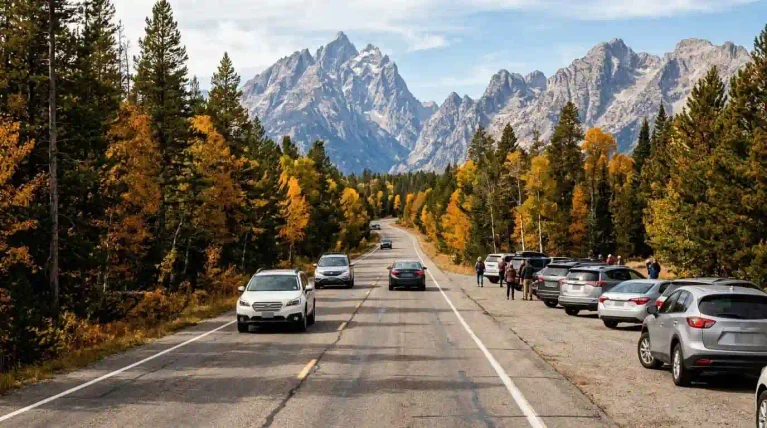
By 8:15 on the Wednesday before Thanksgiving, Megan had already packed the car twice. The first time, she realized the cooler was still in the kitchen. The second time, her husband found the phone charger underneath the passenger seat and asked if they really wanted to leave without it. Their two kids were in the back, surrounded by pillows, headphones, jackets and the kind of collection of snacks that somehow takes up more space than the luggage.
They were driving to Megan’s parents’ house, a trip they’d made plenty of times before. Nothing about the route was unfamiliar. They knew where to stop for gas. They knew which exit had the decent coffee. They knew the stretch of highway where the kids usually started asking how much longer.
Megan also knew what she didn’t want. Traffic.
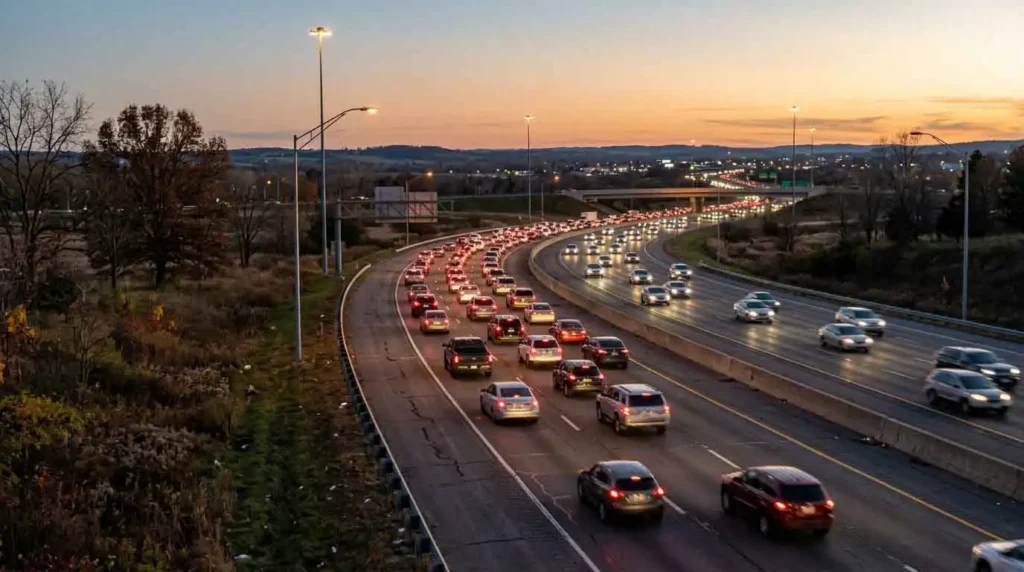
She opened the navigation app before pulling out of the driveway. The route looked fine. Forty minutes later, it didn’t. The green lines had begun turning yellow, then red.
“Maybe we should have taken the other highway,” her husband said.
Megan stared at the screen. Maybe. They had said that before.
The route wasn’t always the problem
The first Thanksgiving they made the drive, they left after breakfast. That seemed sensible. Nobody wanted to wake the children before dawn, and there was no reason to sit around waiting to leave when they could have a relaxed breakfast first. They hit traffic.
The following year, they tried a different route. It added a few miles but looked faster on the map. That worked for a while. Then the alternative route slowed down, too. Another year, they waited until later in the morning because they’d heard the early rush would be worse. It wasn’t a disaster. It just wasn’t particularly good either.
There were stretches when the highway moved normally, followed by long periods of creeping along behind brake lights. A stop for gas took longer than expected. A bathroom break became a 20-minute affair because half the cars around them seemed to have stopped at the same place.
None of their decisions had been foolish. That was almost the frustrating part. They had been doing what most people do when a familiar road becomes unpleasant: looking for a better road.
But Thanksgiving traffic is not an ordinary Tuesday traffic problem. The holiday compresses a huge amount of travel into a relatively short period. AAA’s 2025 Thanksgiving forecast, for example, projected 81.8 million Americans traveling at least 50 miles from home, with nearly 90 percent expected to travel by car. INRIX expected Tuesday and Wednesday afternoons to be the most congested periods before Thanksgiving, while Sunday was expected to be particularly difficult for people returning home.
When that many people are making similar decisions at roughly the same time, finding a different road does not necessarily solve the underlying problem. Sometimes the better question is a much simpler one.
When are you getting on the road?
The small realization Megan had missed
Megan didn’t have this thought while sitting in traffic. She had it later that night.
The kids were asleep. The dishes from dinner were still in the sink. She was standing at the kitchen counter looking at the next day’s plans when she realized something slightly annoying.
They had spent hours choosing a route. They had barely discussed the departure time. They had treated leaving at 8:30, 9:00 or 10:00 as if those were basically the same decision. They weren’t.
The roads weren’t static. Traffic built, spread and changed throughout the day. And on a holiday when so many households were traveling for the same reason, the timing of those departures mattered. Megan opened her phone again. This time she wasn’t looking for another highway. She was looking at the clock.
Why Thanksgiving traffic can change so much during the day
There is a reason traffic advice for Thanksgiving often sounds less like “take this road” and more like “don’t be on the road at this particular part of the day.”
Holiday congestion has several moving pieces. There are the people leaving home, commuters still traveling, people arriving in larger cities and suburbs, and drivers stopping for fuel, food and bathrooms. There are also crashes and construction that can turn an already busy road into a much bigger problem.
And because holiday travelers are not all starting from the same place, congestion can move from one part of a trip to another. A route that looks shorter on a map can still take longer if it feeds into a heavily congested metropolitan area at the wrong moment. That is why the shortest route and the fastest trip are not always the same thing.
Historical INRIX Thanksgiving guidance has identified the Wednesday afternoon period before Thanksgiving as one of the heaviest congestion periods, while recommending morning travel as one way to avoid the worst of the buildup. Its 2024 guidance similarly identified Tuesday and Wednesday afternoons as particularly difficult and Thanksgiving Day itself as a comparatively light period for road traffic.
That doesn’t mean the highway suddenly becomes empty at a magic hour. It means the amount of traffic on the road is not fixed. And that gives a traveler one useful variable they can actually control.
The clock.
The Wednesday window
For families leaving Wednesday, the evidence points toward an early departure rather than simply waiting for breakfast to be over. Before 11 a.m. Wednesday is a period worth considering, with heavier congestion expected later in the day. That should be treated as a period worth considering, not a promise that your trip will be traffic-free.
Your starting point matters. So does your destination. A driver leaving a small town for another small town is dealing with a different trip from someone crossing a major metropolitan area. And a 6:30 a.m. departure doesn’t help much if the household spends the first hour looking for missing shoes, filling the gas tank and arguing about who forgot the dog food.
The useful part of an early departure is not the number on the clock by itself. It’s getting ahead of the larger wave of travelers whenever the trip and the household make that possible. That means the real preparation often happens the night before.
Fill the tank. Load the car. Put the cooler in. Charge the phones. Know where the first sensible stop will be.
Then, in the morning, you’re not trying to turn the house into an airport departure lounge. You’re just leaving.
Thanksgiving morning is a different kind of option
For some families, Wednesday isn’t practical. Work doesn’t end early enough. School is still in session. A pet needs care. A relative is hosting dinner late. Or perhaps the family simply doesn’t want to spend a holiday morning waking everyone before sunrise. That’s where Thanksgiving morning becomes interesting.
The research identifies Thanksgiving morning as another departure window worth considering.
Historical INRIX and AAA guidance has also pointed toward Thanksgiving morning as one of the lighter periods for highway travel compared with the major pre-holiday rush. In AAA’s 2024 forecast, Thanksgiving Day was listed as having minimal traffic impact nationally, while earlier guidance recommended travel before 10 a.m. or after 5 p.m. on Thanksgiving Day.
Again, there is no guarantee.
A major metro, a crash, bad weather or construction can change the picture quickly. AAA specifically cautions that incidents and severe weather can disrupt otherwise favorable travel periods. But for a family that has some flexibility, Thanksgiving morning can change the calculation.
Instead of competing with everyone trying to get out of town on Wednesday afternoon, you’re traveling on the holiday itself. That may sound strange until you picture the alternative. The kids are already awake. The car is packed. Nobody has to rush home from work.
And if the destination is a family Thanksgiving dinner rather than an early-morning event, leaving in the morning may still leave plenty of time to arrive. For some households, that’s a much more realistic solution than trying to force an impossibly early Wednesday departure.
The return trip deserves its own plan
This is the part families often forget. They plan how to get there and treat getting home as something that will sort itself out. It usually doesn’t.
If you can choose your return day, Saturday is worth considering before automatically accepting Sunday afternoon. AAA and INRIX data show Sunday as a particularly difficult return period. By Saturday, you may have more flexibility to avoid the heavier Sunday travel period. The reason is fairly intuitive: by Sunday, a large number of holiday travelers are trying to finish the same journey and get home before work or school begins again.
AAA’s 2025 Thanksgiving forecast expected heavy traffic for Sunday returns and advised travelers to get on the road in the morning to avoid the worst backups.
For a family that can stay an extra night, Saturday can therefore be more than a nice extension of Thanksgiving. It can be a traffic decision.
Not everyone has that luxury, of course.
If Sunday is the only option, the useful question becomes: How early can we realistically leave?
Not how early would be theoretically perfect. How early can four people, a dog and six bags actually get out the door without making the entire morning miserable? There’s a difference.
Megan’s experiment was deliberately boring
The next Thanksgiving, Megan didn’t change the route. She didn’t find a secret back road. She didn’t download three new traffic apps. She simply prepared differently.
The night before, she filled the tank and packed the food. The children chose their clothes before bed. Her husband loaded the heavier bags into the trunk.
They set a departure time that was earlier than their usual Wednesday start and gave themselves a little room around it.
In the morning, they still forgot something. Of course they did.
Megan went back inside for the water bottle she’d left beside the sink. They still stopped once. The kids still asked how much longer.
The navigation screen still showed patches of traffic. But the trip felt different. They weren’t trying to escape traffic after it had already formed. They were trying to get ahead of some of it. That distinction mattered.
Think in windows, not magic times
This may be the most useful way to approach Thanksgiving road-trip traffic. Don’t search for one perfect departure time. Think in windows.
If you’re leaving Wednesday
The research points toward an early start, with before 11 a.m. Wednesday identified as a period to consider. If that isn’t realistic, don’t turn the trip into a punishment exercise just to hit an arbitrary number. Check the expected conditions for your specific route and see what a later departure does to the trip.
If you’re leaving on Thanksgiving
Thanksgiving morning is one of the research-supported windows to consider, and historical AAA/INRIX guidance has found Thanksgiving morning comparatively favorable for driving. For households with flexibility, this can be one of the more interesting alternatives to the Wednesday rush.
If you’re coming home
If you can choose your return day, Saturday is worth considering before automatically accepting Sunday afternoon. AAA/INRIX data show Sunday as a particularly difficult return period. If Sunday is unavoidable, an earlier departure may be preferable to waiting until the middle of the day.
When changing the route actually makes sense
None of this means you should stubbornly stay on one highway. Routes matter. If your navigation app shows a serious incident, closure, weather problem or major delay, taking another road can obviously be the right decision.
The mistake is assuming that a route change is automatically the first solution. If several major routes are feeding the same congested metro area at roughly the same time, changing highways may simply move the problem around. And a complicated detour can create its own problems: more miles, more fuel, unfamiliar roads, fewer convenient stops and more chances to lose the time you thought you were saving.
Before making a dramatic reroute, ask a simpler question: Would leaving an hour earlier change more than changing roads?
Sometimes it will. Sometimes it won’t. That’s why the traffic check before departure still matters.
A few Thanksgiving driving mistakes that feel very familiar
Leaving when breakfast is finished.
Breakfast is not a departure strategy. If you want an early window, work backward from it and prepare the night before.
Assuming the fastest route will stay fastest.
A navigation app is working with changing conditions. A route that wins at 8 a.m. may not win at 11.
Waiting until traffic is already awful.
Once you’re sitting in a long backup, your options become smaller. Checking conditions before leaving gives you more choices.
Planning the outbound trip and forgetting the return.
Sunday afternoon can look harmless when you’re sitting at Thanksgiving dinner on Thursday. It won’t necessarily feel harmless three days later.
Taking a huge detour to save a little time.
Holiday driving already asks a lot of the driver. Saving ten minutes on paper may not be worth adding unfamiliar roads and extra stops.
Treating a departure time as a guarantee.
It isn’t. The research gives travelers windows to consider, not a magic formula.
Doing too much of the preparation on travel morning.
The earlier you want to leave, the less sense it makes to start packing when everyone else is waking up.
The question Megan asks now
Megan still checks the route. She still looks at the traffic. She still changes highways when the situation genuinely calls for it. But she doesn’t spend quite so much time hunting for the perfect road. Before Thanksgiving, she asks a different question.
When can we get on the road before the worst of the congestion builds?
Sometimes that means Wednesday morning. Sometimes it means Thanksgiving morning. Sometimes it means staying one more night and coming home Saturday. And sometimes the family’s schedule simply doesn’t allow any of those choices. That’s fine, too.
Thanksgiving traffic isn’t something a family can control. Neither are crashes, construction, weather or the decisions of thousands of other drivers. But the time you leave is one of the few parts of the journey that belongs to you. Megan hasn’t discovered a secret highway.
She has just stopped assuming the highway is the whole problem. And these days, when the family arrives at her parents’ house with the children still awake, everyone still speaking to one another and enough energy left for dinner, that’s more than good enough.