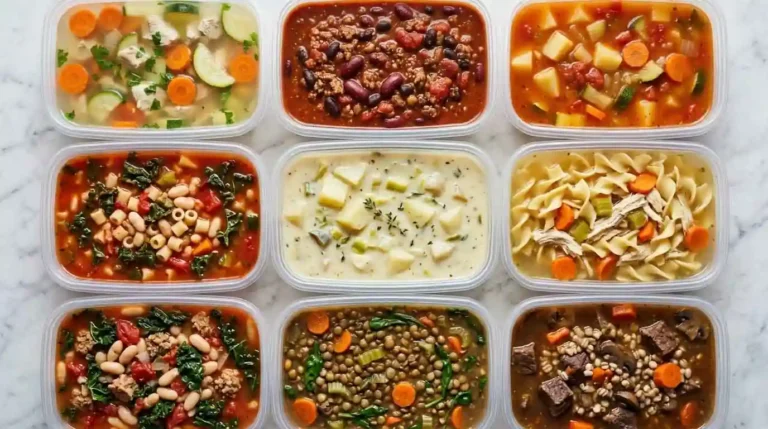
By Sunday afternoon, dinner can already feel like a problem from the following week. The groceries are put away. The laundry is somewhere between clean and folded. There are things that need to happen before Monday, and the week ahead already has its usual mix of school, work, errands, appointments and small household jobs that somehow take longer than expected. This is usually when meal prep starts to sound appealing.
Cook a big batch of ground beef. Put it into containers. Maybe cook some rice, too. Now dinner is handled for several nights. On paper, it’s an excellent plan.
Then Tuesday arrives. The ground beef is still there. So is Wednesday’s portion. Changing the cheese, adding a different hot sauce or putting the meat into a tortilla can make dinner look a little different, but it doesn’t necessarily make it feel different. By the third meal, everyone knows what’s happening.
The problem isn’t a lack of cooking skill. And it isn’t necessarily that the household dislikes leftovers. The problem is what got prepped.
A finished meal has already made too many decisions: this seasoning, this sauce, this starch, this set of vegetables. Once those decisions are baked into a container, there aren’t many directions left to take it.
A batch of deliberately restrained ground meat is different. It can wait. That is what makes this kind of ground beef meal prep useful. Instead of preparing three dinners on Sunday, prepare the part of dinner that tends to take the most work. Then give it a different job each night.
Why Does Meal Prep Have to Mean Eating the Same Thing All Week?
There is a particular kind of meal prep that looks efficient while creating a new problem. You cook an entire recipe in a large quantity, divide it into containers and call the week organized. The cooking is done, but the menu is locked. Three portions of chili are still three portions of chili, even if one gets tortilla chips and another gets cheese.
That approach can work perfectly well for someone who genuinely wants the same meal several times. But it doesn’t solve the repetition problem. A flexible component gives you more room.
Ground meat is especially well suited to this because one of the more time-consuming parts—getting the meat cooked, browned and ready to use—can be completed before the week gets hectic. After that, the character of the meal can come from whatever happens in the skillet that night.
It sounds like a small change. Over the course of a week, it leaves you with more options at dinner.
The Sunday task becomes: make useful ground meat.
Monday’s task might be: turn some of it into a taco-style skillet.
Tuesday: make a tomato-rich meat sauce for pasta.
Wednesday: build a chili.
The meat is the common thread, but it isn’t the identity of the meal.
What Should My Ground Meat Base Actually Taste Like?
The temptation when batch cooking is to make the meat delicious immediately.
That usually means plenty of seasoning. Maybe chili powder. Maybe Italian herbs. Maybe soy sauce, cumin, smoked paprika or Worcestershire sauce.
For this system, restraint is more useful.
Think of the first batch as a well-browned ingredient rather than a finished recipe.
For a household of several people, roughly 2 to 3 pounds of ground beef is a practical working example, although the amount should be scaled to the number of dinners and people you’re feeding. Ground turkey can be used in the same general framework; just remember that ground poultry needs to reach 165°F, rather than the 160°F minimum for ground beef.
Start with a large skillet or Dutch oven and brown the meat in batches if necessary. Crowding the pan makes it harder to develop the browned bits that give the meat some character.
Once the meat reaches the appropriate safe internal temperature, add a modest amount of finely chopped onion and garlic if you want them in the base. Season with salt and black pepper. That’s about where to stop.
The goal isn’t bland meat.
It should taste good enough to eat, but neutral enough that tomorrow’s tomato sauce won’t have to fight yesterday’s taco seasoning.
Drain excess fat when appropriate, then let the cooked meat cool and divide it according to how you expect to use it.
That is the important moment in the whole process. The batch stops being “Monday’s dinner” and becomes an ingredient.
How Can One Batch Become Three Different Dinners?
Now the same batch has to do three different jobs.
The same cooked ground beef can become three very different dinners, depending on what you add to it. The meat is already cooked, but the rest of the meal is still undecided.
1. Give It a Taco-Style Job
For the first dinner, put some of the cooked ground beef into a skillet with taco-style seasoning, beans and corn.
Add salsa or tomatoes for moisture, then let everything simmer until the flavors come together. The mixture can go into tortillas, over rice, or into bowls with lettuce and whatever toppings make sense for the household.
What makes this different from simply reheating the meat is that the ground beef is being cooked again with a new group of ingredients. Beans change the texture. Corn brings sweetness and bite. Salsa supplies acidity and moisture. The seasoning changes the aroma.
The finished dinner is a taco-style skillet meal.
It doesn’t taste like plain batch-cooked beef wearing a different hat.
2. Turn It Into Italian-Style Meat Sauce
On another night, the same base can take a completely different route.
Warm the ground beef with crushed tomatoes, garlic and Italian herbs. Let it simmer long enough for the tomato and meat to become a cohesive sauce.
Now serve it over pasta, spoon it into a baked pasta dish, or use it as the meat layer in another tomato-based dinner.
The important change isn’t simply “add tomatoes.”
The starch is different. The sauce is different. The herbs are different. The texture becomes softer and more cohesive. Instead of a skillet filling, the meat becomes part of a sauce.
3. Make It Chili
Chili gives the remaining portion another identity altogether.
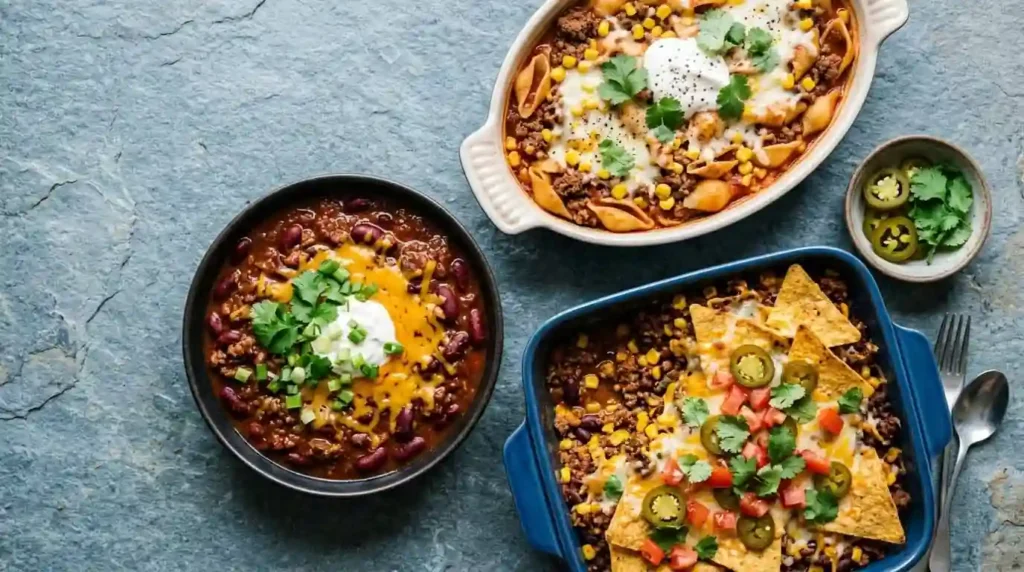
Combine the ground beef with beans and tomatoes, then season with chili powder and cumin. Depending on the household, onions, peppers, corn or other vegetables can join the pot.
Let it simmer until the flavors settle together.
A bowl of chili has a different structure from both pasta with meat sauce and a taco skillet. It is wetter, spoonable and built around beans, tomatoes and warming spices. Rice, cornbread, tortilla chips or a simple piece of toast can change the way it is served without requiring another major cooking project.
How Do I Stop the Third Dinner From Feeling Like Leftovers?
The containers aren’t really the point.
If all three meals use the same sauce, same starch and same vegetables, the system hasn’t really solved the problem. You’ve simply organized leftovers more efficiently.
The simplest way to keep the dinners from blending together is to change a few things at once:
Change the sauce or liquid. Salsa and tomatoes do different work from a tomato pasta sauce or a chili broth.
Change the seasoning. Taco seasoning creates one flavor profile; Italian herbs create another; chili powder and cumin take the meat somewhere else.
Change the starch. Tortillas, pasta, rice, cornbread and baked potatoes all make the same protein behave differently on the plate.
Change the texture. Beans and corn create a different bite from a smooth meat sauce. Chili develops a spoonable texture. Pasta gives the meat sauce something substantial to cling to.
Finish differently. Cheese, cilantro, sour cream, parsley, Parmesan, scallions or crushed tortilla chips can help, but they should be the finishing touch—not the entire strategy.
This is also why the order of operations matters.
Most of the cooking happens once. Each night still gets its own small cooking job.
What Does This Look Like on an Actual Weeknight?
Sunday is the only day that requires a full cooking session.
Cook the ground beef, season it lightly, cool it safely and divide it into portions. Refrigerate the portions you’ll use within 3 to 4 days, and freeze anything that won’t fit within that window.
Then the rest of the week gets to be ordinary.
Monday is taco night. One portion meets beans, corn, salsa and taco seasoning, with tortillas or rice to finish the meal.
Tuesday, another portion goes into crushed tomatoes with garlic and Italian herbs while a pot of pasta cooks.
Wednesday, the last portion becomes chili with beans, tomatoes, chili powder and cumin.
There may still be chopping. There may still be a pot to wash.
But there isn’t the same blank page at 5:30 p.m.
The hard part of dinner has already happened.
Ground beef meal prep doesn’t have to mean filling three containers with the same finished recipe. It can mean preparing one dependable ingredient and leaving enough decisions open for the days when you actually sit down to eat.
And that solves the original Sunday problem rather neatly.
The refrigerator contains cooked ground meat, but Monday does not taste like Sunday. Tuesday doesn’t taste like Monday. By Wednesday, the household isn’t being asked to eat the same dinner again with a new topping.
One batch did the repetitive work.
The rest of the week gets to be dinner.