By October, the soup pot starts making more sense. The evenings are cooler. The kitchen windows stay closed. A big pot of something simmering on the stove feels like both dinner and a small act of preparation for the week ahead.
So a home cook makes soup. A lot of it.
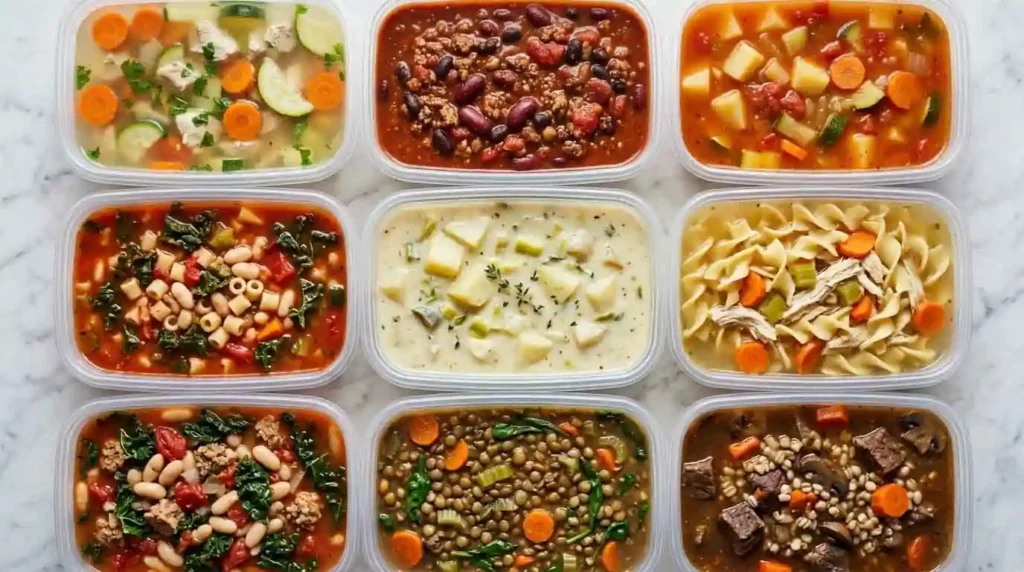
The plan is straightforward: eat some tonight, ladle the rest into containers, put those containers in the freezer, and congratulate yourself later when dinner requires little more than a saucepan.
Then a few weeks pass.
One container comes out of the freezer. The soup looked perfectly good going in. Maybe it was creamy chicken soup, potato soup, minestrone, or something thick with vegetables and pasta. It gets reheated, the kitchen smells good, and the first spoonful looks familiar.
The texture is not.
The creamy soup has separated into a slightly grainy mixture. The potatoes have lost their pleasant, substantial bite and seem oddly mealy. The pasta has swollen until there is barely enough broth around it. A vegetable that was tender but intact when the soup was fresh now seems soft enough to surrender completely.
Nothing is necessarily wrong with the soup in the food-safety sense. It simply isn’t the soup the cook remembers making.
So the cook tries again with another batch, perhaps changing the recipe slightly or blaming the freezer. The same general problems show up.
Eventually the question changes.
What if the problem isn’t how the soup was cooked?
What if it’s what was frozen?
That is a much more useful way to think about frozen soup.
Freezing soup is a cooking decision, too
Soup looks like one thing in the pot, but its ingredients don’t all behave the same way in the freezer.
It is broth, starch, vegetables, meat, dairy, herbs and sometimes pasta, all occupying the same container but responding differently to freezing and reheating.
When food freezes, water forms ice crystals. The size of those crystals matters: larger crystals can damage the structure of food, while quicker freezing tends to produce smaller crystals and better texture. In vegetables, for example, freezing can rupture cell walls and leave thawed produce softer than it was when fresh.
That matters because soup ingredients are already being pushed around by heat, water and cooking.
A vegetable with plenty of water and delicate structure may come out softer. A cooked starch may take up more liquid than you wanted. A dairy-based mixture may separate. A potato can become crumbly or mealy.
The freezer hasn’t necessarily ruined the soup. It has simply exposed the fact that some ingredients are much less forgiving than others.
That is why the better question isn’t always, “Can you freeze soup?”
A better question is:
Which parts of this soup are happiest after freezing, and which parts would rather wait?
The base-first approach
Once that question is on the table, the strategy becomes clearer.
Instead of thinking:
Make everything → freeze everything → reheat everything
think:
Build the sturdy base → freeze it → reheat it → finish the soup.
Penn State Extension specifically recommends concentrating soup before freezing and adding additional liquid when preparing it for serving. It also notes that pasta, noodles and rice can become mushy, while potatoes can crumble and become mushy after freezing.
That doesn’t mean every soup should be dismantled before it reaches the freezer.
It means the freezer can become another stage of the recipe.
A tomato-and-bean soup might freeze well as a finished soup. A creamy potato soup may need more thought. A chicken noodle soup may be better if the noodles are cooked separately or added later. A vegetable soup can depend heavily on which vegetables are in it and how they were prepared.
The recipe still matters.
But the cook no longer has to assume that every ingredient should take the same trip through the freezer.
Dairy and cream: know when to add them
Creamy soup is one of the places where freezing can be especially disappointing.
The National Center for Home Food Preservation lists cream or custard fillings, milk sauces and sour cream among foods that can separate, become watery or change texture after freezing and thawing. Penn State also notes that frozen gravy or creamed sauces made with regular flour or cornstarch may separate when first thawed, although they can sometimes return to an acceptable texture when heated and stirred.
That is a quality issue, not a reason to declare all dairy-containing soups off-limits.
Some recipes are designed to be frozen with their dairy components. Others are much happier if the creamy ingredient is held back.
For a soup where the dairy is more likely to separate, the practical move is to freeze the broth-and-vegetable base and add the cream, milk or other finishing dairy while reheating, if the recipe permits it.
This can also make the frozen portion more flexible. The base can be adjusted with fresh liquid and the dairy added at the end, rather than asking a delicate emulsion or cream-based mixture to survive every stage at once.
The important phrase is “if the recipe permits it.” A tested recipe may rely on a particular thickener, fat content or cooking method that changes how well the finished soup freezes.
Potatoes: the texture problem
Potatoes have a reputation for being difficult freezer companions, and there is a good reason for it.
The National Center for Home Food Preservation describes boiled or baked Irish potatoes as soft, crumbly, water-logged or mealy after thawing. Penn State’s soup-preservation guidance likewise says potatoes can crumble and become mushy, while noting that waxy potatoes generally freeze better than baking-type potatoes.
That is different from saying, “You can’t freeze potatoes.”
Prepared potatoes can behave differently depending on the form and recipe. Penn State’s guidance on prepared potatoes, for example, describes methods for freezing mashed potatoes in which added fat helps maintain texture.
For soup, though, the distinction matters.
A potato cube has a very different job from mashed potato. In a chunky soup, you may want it to emerge from reheating as a distinct piece rather than a soft, broken-down component.
If potato texture is central to the finished soup, look for a tested recipe that specifically addresses freezing rather than assuming a fresh potato soup will behave the same way after thawing.
Sometimes the smarter freezer soup is the one whose base is frozen without the potato, with the potato cooked and added later. Sometimes another variety or preparation works better.
This is one of those places where the recipe gets the final vote.
Pasta: don’t let it drink the broth
Pasta has a different problem.
Cooked pasta doesn’t simply sit in soup. It can continue taking up surrounding liquid. That can be useful when you’re eating a bowl immediately. It is less useful when the pasta spends time sitting in broth before freezing and then goes through thawing and reheating.
The National Center for Home Food Preservation lists cooked macaroni and spaghetti among foods that do not freeze well on their own, describing them as mushy after thawing. Penn State specifically advises that starchy ingredients such as pasta, noodles and rice can become mushy when frozen in soup.
For a soup where noodles are meant to have a distinct texture, cooking the pasta separately can be a more controllable approach. You can add it to each reheated portion rather than freezing it in the broth.
Another option is to add the pasta later in the cooking process when the soup is being reheated, provided the recipe is designed for that timing.
The freezer then gets the broth and its sturdier ingredients. The pasta gets a shorter, fresher cooking session.
That is a small change, but it can make a surprisingly large difference in the bowl.
Vegetables: texture matters more than a simple yes or no
Vegetables don’t fall into one convenient freezer category.
Some hold up well to freezing, while high-moisture or delicate vegetables can lose their original firmness. Freezing causes water in plant cells to form ice crystals, and those crystals can damage cell walls. When the food thaws, the result can be softer or more watery.
For vegetables being frozen on their own, extension guidance generally recommends blanching many vegetables before freezing. Blanching slows enzyme activity that can affect quality during storage, and proper cooling prevents the vegetables from continuing to cook.
Soup is a little different because many vegetables are already cooked as part of the recipe.
The useful question is therefore not simply, “Does this vegetable freeze?”
Ask what texture you want after reheating.
Carrots in a soup can be quite forgiving. A delicate, high-moisture vegetable may become softer. A vegetable that you want to stay crisp or fresh may be worth adding near the end.
And if a recipe has been specifically tested for freezing, follow its instructions rather than trying to apply a general vegetable rule to it.
Tender greens and fresh finishing ingredients
The same thinking applies to ingredients whose appeal comes from freshness.
Tender greens, fresh herbs, scallions and other finishing ingredients can lose some of the freshness that made them appealing in the first place when they are cooked, frozen, thawed and reheated.
That doesn’t mean every green should stay out of the freezer. Some greens can be frozen successfully when they’re prepared for freezing.
It does mean that a soup can benefit from having a few ingredients added after the frozen base is reheated.
A handful of tender greens can cook in the hot soup. Fresh herbs can go in at the end. A squeeze of lemon, a swirl of cream or another fresh garnish can be added to the serving bowl.
Those aren’t freezer tricks so much as ordinary cooking decisions made later.
A better way to build freezer soup
Once you stop treating the finished soup as one indivisible thing, the freezer becomes easier to work with.
| Ingredient/component | Better freezer approach | Add when |
|---|---|---|
| Broth/base | Freeze as the foundation of the soup | Before freezing |
| Sturdy vegetables | Often freeze with an appropriate soup base | Before freezing |
| Potatoes | Recipe-dependent; some preparations lose texture | Follow a tested recipe |
| Dairy/cream | Often worth holding back when the recipe allows | During reheating |
| Pasta | Can be better cooked separately or added later | During reheating |
| Tender greens | Add later when appropriate to the recipe | Near the end |
| Fresh finishing ingredients | Hold back when freshness is part of their appeal | Final stage |
The table is a framework, not a universal recipe. The same ingredient can behave differently depending on how it is cut, cooked, thickened and combined with the rest of the soup.
What not to freeze this way
There are soups that simply aren’t worth forcing into a freezer-friendly format.
If a soup depends heavily on a texture that freezing is likely to damage, you may be happier making a smaller batch and eating it fresh.
That can include soups dominated by potatoes with a texture you particularly want to preserve, soups thickened with ingredients that separate noticeably, or soups where cooked pasta is doing much of the work.
And there is no prize for freezing every last spoonful.
The goal is not to make the freezer accept everything.
The goal is to freeze the parts that will still be good when they come back out.
That might mean freezing a concentrated base, freezing the complete soup, or putting the leftovers in the refrigerator for the next few days.
Keep food safety separate from texture
There is another reason not to confuse freezer quality with freezer safety.
USDA’s Food Safety and Inspection Service recommends keeping the freezer at 0°F or below. Properly frozen leftovers can remain safe indefinitely, although quality declines over time; for soups and stews specifically, USDA lists 2 to 3 months for best quality.
For a large pot of soup, don’t leave it sitting around while deciding what to freeze. USDA recommends dividing large amounts of leftovers, such as soup, into shallow containers so they cool more quickly, and refrigerating or freezing leftovers within two hours.
Frozen leftovers can be thawed in the refrigerator, in cold water, or in the microwave. USDA also says soup and other frozen leftovers can be reheated without thawing first.
For reheating, USDA recommends bringing soups, sauces and gravies to a rolling boil and reheating leftovers to 165°F, measured with a food thermometer.
Those are food-safety instructions. They are separate from the question of whether your potato will be pleasantly firm or your cream sauce will remain smooth.
A soup can be perfectly safe and still have a texture you don’t enjoy.
The freezer becomes part of the recipe
The next time the cook makes a large pot of soup, the containers on the counter look a little different.
Not every ingredient automatically goes in.
The broth and sturdy components may be portioned for the freezer. The pasta might wait in the pantry until dinner. The cream may stay in the refrigerator. Tender greens and fresh herbs can be ready for the final few minutes of reheating.
Nothing magical happened to the freezer.
The cook simply stopped asking every ingredient to behave the same way.
That is the useful lesson behind better frozen soup. You don’t necessarily have to stop freezing homemade soup. You just have to decide which version of the soup deserves to meet the freezer.
Sometimes the best freezer meal isn’t the finished dish put away exactly as it came off the stove.
It’s the base you prepared so that, when Tuesday dinner comes around, the soup still has a chance to become itself again.
The freezer, in other words, works better when it is part of the cooking plan—not the place where leftovers go to die.