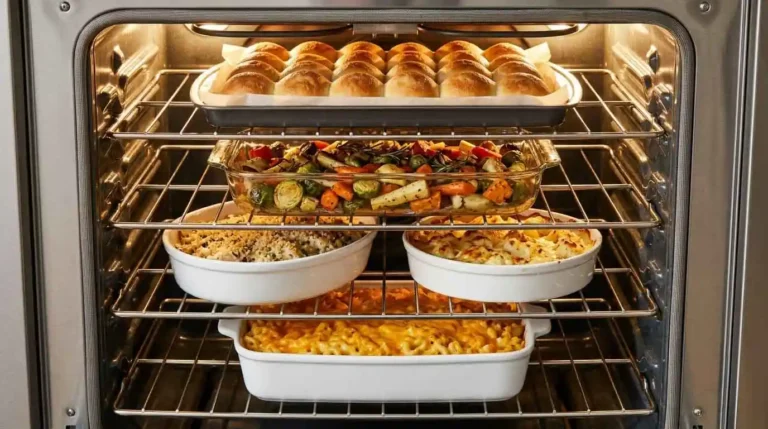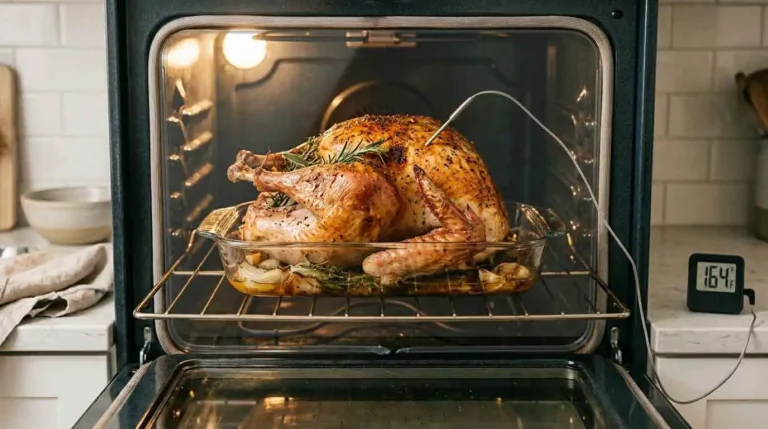
The trouble usually starts with the oven. The turkey is in there, naturally. Then somebody remembers the stuffing needs baking. The sweet potatoes need their final pass. The macaroni and cheese is sitting on the counter, waiting for its turn. Rolls still need to go in. Something else is supposed to be reheated at 350 degrees, which would be fine if three other dishes weren’t supposed to be reheated at 350 degrees, too.
None of those dishes is especially difficult. That’s what makes Thanksgiving cooking so peculiar. A cook can look at the menu beforehand and think, I can make all of this. And that’s true. The problem is that all of it wants attention within roughly the same few hours.
A home cook who has been through this a few times can start blaming the wrong thing. Maybe the menu is too ambitious. Maybe she needs to get up earlier. Maybe she needs better timing, more baking dishes, a second oven. Or maybe she just needs to stop asking Thanksgiving Day to do all the work.
The problem isn’t necessarily the cooking
Consider an ordinary Thanksgiving kitchen. The cook knows how to make mashed potatoes. She knows how to assemble stuffing. She has made a sweet potato casserole often enough that the recipe is practically muscle memory. She is not learning how to cook Thanksgiving dinner.
She’s trying to make five or six dishes that all need to be cooked, reheated, browned or finished while a turkey is occupying the largest appliance in the room.
Making everything the morning of Thanksgiving sounds reasonable until the clock starts moving. Making some things the day before helps, but it doesn’t solve the larger problem. Refrigerated casseroles still need oven space. Mashed potatoes still need reheating. Rolls still need baking, and that leads to a more useful question:
Which Thanksgiving side dishes can leave the Thanksgiving schedule altogether?
Not merely be chopped ahead. Not merely assembled Wednesday.
Actually prepared, packaged and frozen weeks earlier, so that Thanksgiving Day involves thawing, reheating or finishing rather than starting from scratch.
That distinction matters because freezing is not a universal time machine. USDA guidance makes an important distinction between food safety and food quality: food kept continuously at 0°F remains safe indefinitely, but its flavor and texture can deteriorate with long storage.
Freezing can also change food’s structure. Ice crystals formed during freezing can damage cells and affect texture as food thaws. Faster freezing generally produces smaller ice crystals, which can mean less damage to the food’s structure.
So the useful freezer candidates aren’t simply the five most popular Thanksgiving sides. They’re the dishes whose structure gives them a fighting chance.
What changes when Thanksgiving sides go into the freezer?
Freezing works by turning water into ice. Those ice crystals can disrupt food’s structure; when the food thaws, some foods emerge softer, wetter or separated from where they started. Faster freezing generally produces smaller ice crystals and can help limit that damage. That explains some of the familiar freezer rules.
A vegetable that depends on a crisp texture can lose some of that appeal. Some creamy sauces may separate. Boiled potatoes, meanwhile, can turn mushy after freezing. But change the form of the food and the picture changes.
Mashed potatoes don’t have to retain the structure of a whole potato. A casserole is already a mixture of ingredients designed to be baked together. Bread, meanwhile, tends to freeze well. A freezer-friendly mac and cheese can also be built around a generous creamy sauce and slightly undercooked pasta, as in tested make-ahead methods.
The better question isn’t simply, Can this food be frozen?
It’s what form the food should be in when it goes into the freezer. That is how the five sides in this plan were chosen.
1. Mashed potatoes: freeze the finished dish, not the potato
Potatoes are a good example of why the freezer question can’t be answered with a simple yes or no.
Whole cooked potatoes don’t freeze particularly well. Mashed potatoes are different. Food Network notes that potatoes’ cellular structure makes whole cooked potatoes poor freezer candidates, while mashed potatoes and potato gratins hold up much better. Utah State University Extension likewise lists mashed potatoes among the potato preparations that retain their quality during freezing, while boiled potatoes tend to become mushy. That makes mashed potatoes one of the most useful sides to remove from Thanksgiving Day.
The important part is the form: cook the potatoes, mash them, and finish them before they go into the freezer. This is also where technique matters. Illinois Extension notes that high-starch potatoes such as russets produce fluffy mashed potatoes, and warns that overworking the starch can make them gummy.
The October job
Make the mashed potatoes completely. Cool them promptly, portion them into freezer-safe airtight containers or bags, and label them with the date and reheating instructions. USDA recommends airtight packaging for frozen foods to retain moisture and protect quality. For Thanksgiving, a shallow family-size container is more useful than one enormous frozen block. Smaller portions can also be easier to thaw and reheat evenly.
Thanksgiving Day
Thaw the potatoes safely in the refrigerator if your recipe calls for thawing, then reheat gently. Food Network’s make-ahead mashed-potato method recommends slowly heating them in the oven to help maintain their fluffy texture. Whatever method you use, USDA’s safety benchmark is the same: reheated leftovers should reach 165°F throughout, measured with a food thermometer. The payoff is bigger than the time spent peeling potatoes. One of the largest bowls on the Thanksgiving menu no longer needs to be cooked from raw potatoes while the turkey is roasting.
2. Mac and cheese: build the casserole before the oven ever gets involved
Macaroni and cheese isn’t on every Thanksgiving table, but where it is, it is exactly the sort of dish that creates oven competition. It also happens to have a useful freezer profile.
The Kitchn’s tested method recommends a creamy sauce and pasta cooked just shy of al dente, then finishes the mac and cheese in the oven. The slightly undercooked pasta has room to continue cooking during the final bake. That is almost tailor-made for an October-to-Thanksgiving plan. The trick is not to bake it first. Starting with pasta that is slightly undercooked and a generous, creamy sauce gives the noodles some room to continue cooking without becoming completely soft.
The October job
Cook the pasta just short of al dente. Make the cheese sauce. Cool the components as directed by the recipe, combine them, transfer the mac and cheese to a freezer-safe baking vessel, and cover it tightly. This is a good example of the larger strategy: you’re not trying to make Thanksgiving Day faster by moving the same cooking steps to 7 a.m. You’re doing the cooking while the kitchen is quiet.
Thanksgiving Day
Thaw the casserole in the refrigerator, then bake it according to the recipe. The food-safety question is separate from the texture question: USDA says casseroles and leftovers should reach 165°F. The texture question is why you started with creamy sauce and slightly undercooked pasta in the first place, and the oven question has been solved before Thanksgiving even begins.
3. Sweet potato casserole: freeze the filling, save the topping
Sweet potato casserole is particularly well suited to this system because its identity is already built around a soft, puréed filling.
Food Network’s current guidance says sweet potato casserole freezes well when the sweet potatoes are cooked first. Its tested method assembles the casserole before the final bake, freezes the topping separately, and thaws the casserole in the refrigerator before baking.
The separation is the important part.
The sweet potato base can be frozen ahead, while the topping is kept separate so it doesn’t lose its texture against the moist casserole.
The October job
Cook the sweet potatoes and assemble the casserole up to the point where it would normally receive its final topping and bake. Wrap the casserole tightly for the freezer. Keep the topping separate.
This is a recurring pattern in freezer-friendly Thanksgiving cooking: freeze the part that likes freezing; save the part that depends on freshness.
Food Network recommends thawing this casserole in the refrigerator for at least 24 hours before baking because of the raw eggs in the preparation. It then recommends bringing the dish out before baking and checking that the finished casserole reaches 165°F.
Thanksgiving Day
Add the topping and bake. The dish still gets its browned, finished surface. But Thanksgiving Day is now doing one relatively contained job instead of making the entire casserole.
4. Stuffing: freeze the work, then make the final call later
Stuffing is where the October plan needs a little more care.
USDA allows uncooked stuffing to be frozen and cooked without thawing. Food Network also has a tested make-ahead sausage stuffing that freezes the prepared mixture for up to two weeks before it is finished and baked.
So stuffing shouldn’t automatically go into the freezer at the beginning of October and sit there until Thanksgiving.
But that doesn’t make it useless.
It makes stuffing better suited to a shorter freezer window or, for an earlier October prep day, a component-freezing project. Food Network’s tested method freezes the bread, sausage and vegetable mixture for up to two weeks, then adds the stock, butter, eggs and parsley before baking. Food Network’s make-ahead sausage stuffing method
That’s arguably the smarter approach anyway.
The October job
If you’re working early in October, freeze the stuffing’s savory base and finish the rest closer to Thanksgiving. If you’re closer to Thanksgiving, you can go farther: tested recipes show that a bread-and-sausage mixture can be frozen and later combined with broth and egg before baking. Package it airtight, label it, and include the finishing instructions.
Thanksgiving Day
The final assembly happens here. This system doesn’t require every side to be completely finished months ahead. The idea is to remove the most labor-intensive pieces from the crowded Thanksgiving window. On Thanksgiving morning, chopping and sautéing are gone. The freezer has already done its part. And the stuffing still gets its browned, crisp top at the end, when it comes out of the oven.
5. Dinner rolls: move the baking schedule instead of reheating bread
Bread is one of the simplest freezer wins, and dinner rolls may be the most useful one for the oven problem. King Arthur Baking has tested more than one way to freeze dinner rolls ahead. One approach is to shape yeast rolls before their rise, freeze them, then thaw and allow them to rise before baking on Thanksgiving. Another method uses parbaked rolls that can be frozen weeks ahead and finished later.
This is a different strategy from the casseroles. The rolls aren’t being frozen as a finished side to reheat. They’re being frozen as future oven work.
The October job
For a longer October-to-Thanksgiving window, parbaking is the more practical approach. King Arthur’s newer guidance says parbaked rolls can be frozen for up to six weeks, then finished in the oven later. Illinois Extension lists two to three months as a quality window for baked yeast breads and rolls at 0°F.
For a shorter window, shaped unrisen dough can also be frozen; King Arthur’s traditional freeze-and-bake method recommends using the frozen unrisen rolls within about two weeks, with several hours of thawing and rising before baking.The safer lesson is to follow the freezing method for the particular dough rather than assume every yeast roll behaves the same way.
Thanksgiving Day
The rolls get their final bake. And now the oven schedule has something going for it: rolls can occupy the oven after the turkey comes out, rather than competing with the turkey for the entire morning. That may be the single most satisfying part of this approach.
The freezer blueprint: five dishes, five different strategies
Once you look at these sides together, the pattern becomes clearer. There isn’t one correct way to freeze Thanksgiving food.
| Side | What happens before Thanksgiving | Thanksgiving Day job | Main thing to protect |
|---|---|---|---|
| Mashed potatoes | Fully prepare and freeze | Thaw/reheat | Creamy texture |
| Mac and cheese | Assemble unbaked and freeze | Thaw/bake | Pasta texture and creamy sauce |
| Sweet potato casserole | Assemble base; freeze topping separately | Add topping/bake | Soft filling and crisp topping |
| Stuffing | Freeze base early; or freeze prepared mixture later in October | Finish, assemble and bake | Moist interior, crisp top |
| Dinner rolls | Parbake or freeze shaped dough according to method | Final rise/bake or finish | Fresh-baked crust and crumb |
That gives a more useful answer to “Can you freeze Thanksgiving sides?” than a blanket yes or no.
Some can be fully prepared. Others are better frozen unbaked, with a topping or other finishing step held back until Thanksgiving. A few work better as frozen components. And some simply aren’t worth freezing.
What not to force into the freezer
This is where a freezer plan can go wrong.
USDA distinguishes food safety from food quality when it comes to freezing. Freezing can affect quality: large ice crystals can damage cells during thawing, and emulsions such as cream or mayonnaise can separate.
Individual Thanksgiving dishes can also have different freezing recommendations depending on the recipe.
Green bean casserole is a useful example of why the answer can depend on the recipe. Food Network has a tested version designed to freeze for up to two weeks, then reheat from frozen and top with fried onions at the end. Other recipes may have different freezing instructions.
Corn casserole is another case where a popular dish doesn’t automatically qualify: Food Network’s recipe guidance specifically advises against freezing its corn casserole because freezing can introduce unwanted moisture.
This is why the five dishes above are more useful than a list of every traditional Thanksgiving side.
The freezer should be a tool, not a dare.
The October question to ask
The useful question in October isn’t:
“What Thanksgiving food can I make right now?”
It’s:
“What can I get completely out of Thanksgiving Day’s cooking schedule?”
Start there. If a side can be fully prepared and frozen without losing the quality that makes it worth serving, do that. If it is better assembled and baked later, assemble it. If its topping needs to be crisp, freeze the base and hold the topping. If only the savory base freezes well, freeze the base, and if the dish depends on a fresh texture that freezing will damage, leave it alone.
That last category matters. A Thanksgiving menu doesn’t need every side to be made in October. You don’t need a freezer full of every dish on the table. You need to remove the dishes that create the biggest Thanksgiving-day bottleneck.
The freezer itself is part of the plan
Freezer preparation is not simply a matter of putting a casserole in whatever container happens to be available.
USDA recommends keeping the freezer at 0°F or below and packaging foods tightly to protect moisture and quality. Airtight containers, freezer bags and appropriate wrapping help limit drying and freezer burn.
Label everything. Not just the name. Write the date, what remains to be done, and the reheating instructions.
“Sweet potatoes” is less useful six weeks later than:
Sweet potato casserole — thaw in refrigerator; add topping; bake.
That little bit of information turns the freezer into a working part of the kitchen rather than a storage graveyard.
And remember that the USDA’s storage times are primarily about quality. Food continuously frozen at 0°F remains safe indefinitely, but quality declines over time.
For Thanksgiving, that means October is not one giant freezing deadline. It is a staging month.
The foods with longer quality windows can go in earlier. Shorter-lived preparations belong later in October or in November.
Thawing is part of the recipe
Freezing only solves half the problem. You still need a thawing plan.
USDA identifies three safe methods for thawing: the refrigerator, cold water and the microwave. Refrigerator thawing is the easiest method for a Thanksgiving schedule because food stays at a safe temperature while it thaws. Countertop thawing isn’t considered safe.
Some casseroles can be reheated or cooked from frozen. USDA says cooked food can be reheated from frozen, although it will take longer.
But that doesn’t mean every casserole should be treated that way.
A tested recipe’s instructions take precedence for texture and for practical oven timing. Sweet potato casserole, for example, has a specific refrigerator-thawing procedure in Food Network’s tested method. The green bean casserole recipe mentioned above calls for reheating the casserole from frozen and adding the fried onions afterward.
So the safest rule is also the simplest:
Freeze according to the recipe’s tested method, thaw according to its instructions, and use a thermometer when reheating cooked food.
Then Thanksgiving finally arrives
The turkey still needs to roast, the gravy still needs attention, and the table still needs setting. Someone will probably still discover that the butter is in the wrong refrigerator. But there are fewer things competing for the oven. The mashed potatoes are ready to reheat, the mac and cheese is assembled, the sweet potato casserole only needs its topping and bake, the stuffing base is done, and the rolls are waiting for their final bake. The cook isn’t moving faster. She simply has fewer things left to cook.
That is what make-ahead Thanksgiving cooking is for. You don’t need to make the whole meal in October, and you don’t need to turn Thanksgiving morning into a perfectly timed production. You just need to notice which jobs can be moved to another day. The oven can only hold so much. October can hold some of it.