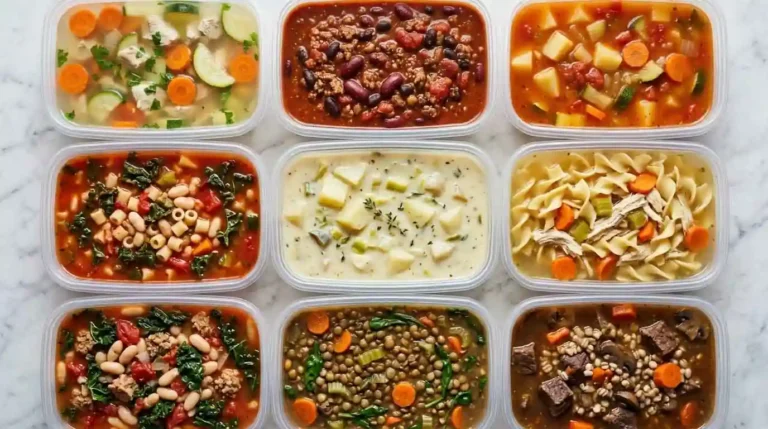
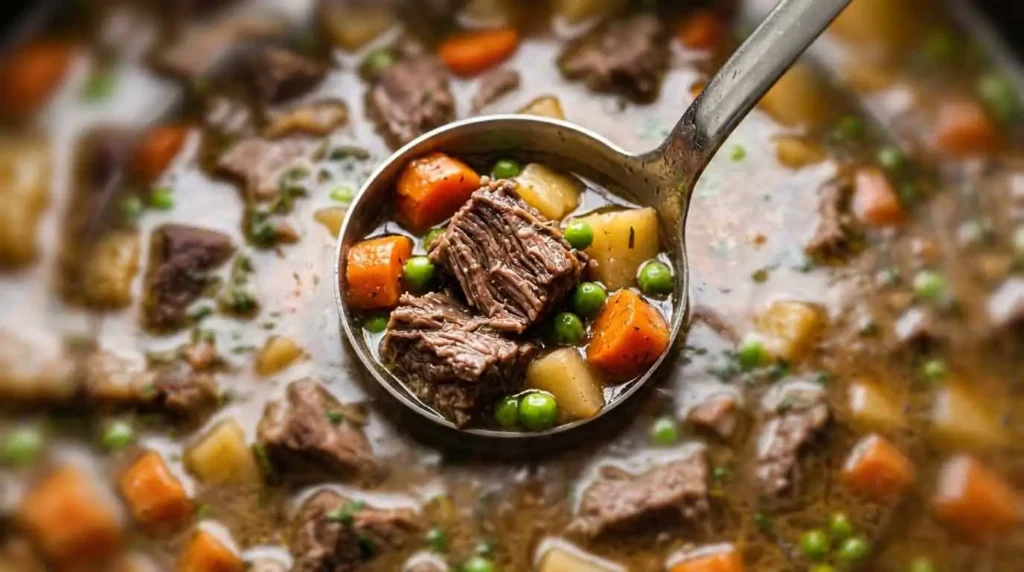
The lid comes off just before dinner, when there is no longer much time to do anything about it. The kitchen has reached that familiar weekday hour: backpacks are on the floor, somebody is looking for a missing water bottle, and the slow cooker has been doing its job quietly since morning. Dinner was supposed to be the easy part.
Then the spoon goes in. The stew is thinner than it looked in the recipe photo. The meat is tender enough, the vegetables are cooked, but the liquid runs across the plate instead of clinging to anything. A taste confirms the other problem. It isn’t exactly bad. It just tastes strangely faint, as though somebody has added water to dinner at the last minute.
So comes the usual rescue attempt. A little salt. More pepper. Maybe another spoonful of the seasoning blend. The recipe gets a second look. The broth measurement is checked. Yes, that was the amount it called for.
This is the part that can make slow-cooker cooking feel unfair. You did what the recipe said. You left the lid on. You waited all day. And somehow the finished meal seems to have less flavor than the one you imagined when you tipped everything into the crock.
After it happens a few times, the question changes. Instead of wondering what went wrong with dinner, you start wondering what is happening inside the cooker. That is where the liquid matters.
A slow cooker is an enclosed cooking environment. Its lid traps steam, and the condensed moisture returns to the food rather than disappearing into the kitchen. Crock-Pot’s own cooking guidance notes that slow cookers have very little evaporation and specifically advises reducing liquid when adapting stovetop soups, stews or sauces. That small difference matters more than it might seem.
A saucepan on the stove is constantly losing some water to evaporation. Leave a pot of stew simmering and the liquid level gradually falls; the remaining sauce becomes more concentrated. The same thing can happen with a braise when some of the cooking liquid is allowed to evaporate. The cook starts with one volume of liquid and finishes with another.
A covered slow cooker doesn’t behave that way. The lid is doing precisely what it was designed to do: keeping moisture in.
That is useful when the goal is tender food that stays moist. It is less useful when a recipe was written around the assumption that some of its liquid would cook away.
There is another source of moisture to account for, too. Meat and vegetables contain water of their own, and some of it is released during cooking. The USDA notes that steam forms within the tightly covered slow-cooker environment as food cooks. Crock-Pot also notes that juices from meats and vegetables are retained more during slow cooking than in conventional cooking.
So the liquid in the recipe isn’t necessarily the liquid you will have at the end.
It sounds obvious once you see it. It is surprisingly easy to forget at 7:30 in the morning, when dinner is being assembled between coffee, email and getting everyone out the door.
Stop treating the liquid measurement as sacred
This is where the idea of a “liquid ratio” becomes useful, provided it isn’t mistaken for a universal formula.
There is no single amount of broth that works for every slow-cooker dinner. A soup is supposed to have plenty of free liquid. A stew needs enough to cook and soften its ingredients but may be better with a thicker, more concentrated sauce. A braise may need comparatively little liquid because the meat and vegetables contribute moisture. A sauce adapted from the stovetop can be especially prone to ending up thin if its original recipe depended on evaporation.
The better question is: How much liquid does this particular dish actually need to cook properly, and how much of that liquid do I expect to still be there at serving time?
That is a more useful question than memorizing a number.
For recipes specifically developed for slow cookers, follow the recipe’s stated liquid amount. When adapting a stovetop recipe, though, resist the reflex to pour in every cup of broth or water listed on the original recipe. Crock-Pot’s guidance is unusually direct on this point: if a stovetop soup, stew or sauce is being moved to a slow cooker, reduce the liquid.
The amount of reduction depends on the dish, its ingredients and the texture you want. A pot of chili can tolerate a different liquid balance from a chicken soup. A beef braise is different again. This is why a fixed percentage can be misleading.
It is also why adding more liquid simply because the ingredients don’t look submerged is not always the right move. Some recipes need enough liquid to transfer heat effectively and cook properly; others do not need every ingredient floating in broth. University of Minnesota Extension notes that liquids play an important role in heat transfer and recommends following the manufacturer’s directions and keeping a slow cooker appropriately filled.
The slow cooker still needs liquid when the recipe calls for it. The trick is not to assume that more liquid will automatically make a better dinner.
Think about flavor before you think about rescue
A watery dish and a bland dish often arrive together, but they are not identical problems.
If a stew has too much water, reducing that liquid can make the existing flavors more concentrated. It cannot create flavors that were never there.
Browning is one example. Searing meat before it goes into the slow cooker takes an extra pan and a few minutes, but Crock-Pot recommends browning as a way to add depth of flavor and render some fat before slow cooking.
Aromatics matter, too. Onions, garlic, herbs and spices establish the flavor base, but some seasonings can change during a long cook. Crock-Pot recommends tasting at the end of the cooking cycle and adjusting salt and pepper, while noting that some ingredients are better added later.
That final taste is important. A slow cooker is not a set-it-and-forget-it machine when it comes to seasoning.
If the finished stew tastes diluted, first ask whether it actually has too much liquid. If so, removing some liquid or concentrating it may help. If the texture is right but the flavor is flat, the answer may instead be seasoning, browning, aromatics or the ingredients themselves.
Those are different repairs.
When dinner is already too watery
This is the moment when the slow cooker has finished its work and the family is hungry.
For a stew, gravy or sauce, one option is to remove some of the excess liquid and reduce it separately on the stovetop. Crock-Pot specifically recommends stovetop reduction as one way to concentrate excess slow-cooker liquid.
Another option is thickening.
A cornstarch slurry can give a thin sauce more body without requiring the cook to wait for a large quantity of water to evaporate. Utah State University Extension describes making a slurry by stirring flour or cornstarch into some of the slow-cooker liquid, returning it to the cooker and cooking until thickened.
The distinction matters: thickening changes body; reduction changes concentration.
If the problem is that there is simply too much watery liquid, a starch thickener may produce a sauce with the right consistency while leaving the underlying flavor just as diluted. Removing or reducing some of the liquid addresses the dilution more directly.
And sometimes the simplest answer is to ladle off a little.
That can feel almost insultingly basic after a day of slow cooking, but it works. Crock-Pot’s guidance suggests using a ladle to remove excess liquid rather than attempting to lift a heavy, hot stoneware insert and pour it out.
There is one thing worth not improvising: food safety. Follow the slow cooker’s instructions, keep the lid on during cooking, and use a food thermometer when needed. USDA recommends thawing meat and poultry before slow cooking.
If you’re working with leftovers rather than a freshly cooked meal, there is another boundary worth remembering: USDA does not recommend reheating leftovers in a slow cooker. Reheat them on the stove, in the microwave or in the oven until they reach 165°F.
The better habit starts before the lid goes on
The easiest watery slow-cooker dinner to fix is the one you prevent.
Before adding liquid, look at the entire ingredient list. Tomatoes, beans, frozen vegetables, meat and fresh vegetables can all contribute moisture as they cook.
Then look at how the original recipe was written to be cooked.
Was it written for a Dutch oven? A saucepan? A stovetop braise?
If so, don’t assume its liquid measurement transfers unchanged to an enclosed slow cooker. That is precisely the kind of adaptation that can leave you with a pot full of perfectly cooked food and a sauce that tastes as though it has been stretched.
The same thinking helps when scaling a recipe. Crock-Pot notes that when doubling a soup or stew, cooks should not simply double the liquid; the lid’s condensation cycle helps maintain the liquid volume.
There is a useful mental shift here. Instead of asking, “How much broth does this recipe call for?” ask, “What job is this broth doing?”
Is it there to provide enough moisture for the ingredients to cook? To make a soup or gravy? To loosen a sauce? To help transfer heat?
Once you know the job, it becomes easier to judge whether the full amount belongs in the cooker.
And sometimes the slow cooker deserves some of the credit
There is a tendency to blame the appliance when dinner comes out wrong.
That is understandable. The machine has one job, after all, and the promise of a slow cooker is built around simplicity. But its greatest strength—retaining moisture—is also one of the reasons recipes can behave differently inside it.
The lid stays closed, steam forms, and condensation returns to the pot.
Once that becomes familiar, the result makes a lot more sense.
The slow cooker isn’t a covered saucepan. A stovetop recipe isn’t automatically a slow-cooker recipe just because the same ingredients fit in the bowl. And a cup of broth added in the morning does not necessarily become a cup of broth that cooks away by dinnertime.
The cook begins to notice other things, too.
A stew that already contains tomatoes may not need as much added liquid as expected. The amount of liquid a cut of beef needs can vary with its fat content, the recipe and the texture you’re after. A soup can deliberately contain plenty of broth because broth is the point. A sauce may benefit from concentration at the end rather than another splash of water at the beginning.
These are judgments, not commandments.
That may be the most useful thing to take from the whole business. There is no magic slow-cooker ratio waiting to be memorized and applied to every recipe. There is a cooking environment to understand.
And once you understand it, the old weekday scene changes a little.
The lid comes off. The food is tender. The sauce sits where it belongs instead of running across the plate. Maybe it needs a little salt. Maybe some fresh herbs. Maybe nothing at all.
The slow cooker hasn’t become smarter.
The person using it has simply stopped expecting water to disappear when the lid is designed to keep it in.